New: 1-877-751-1774
Used: 1-888-977-2603
Service & parts: 450-691-4130
Text sales: (438) 600-1249

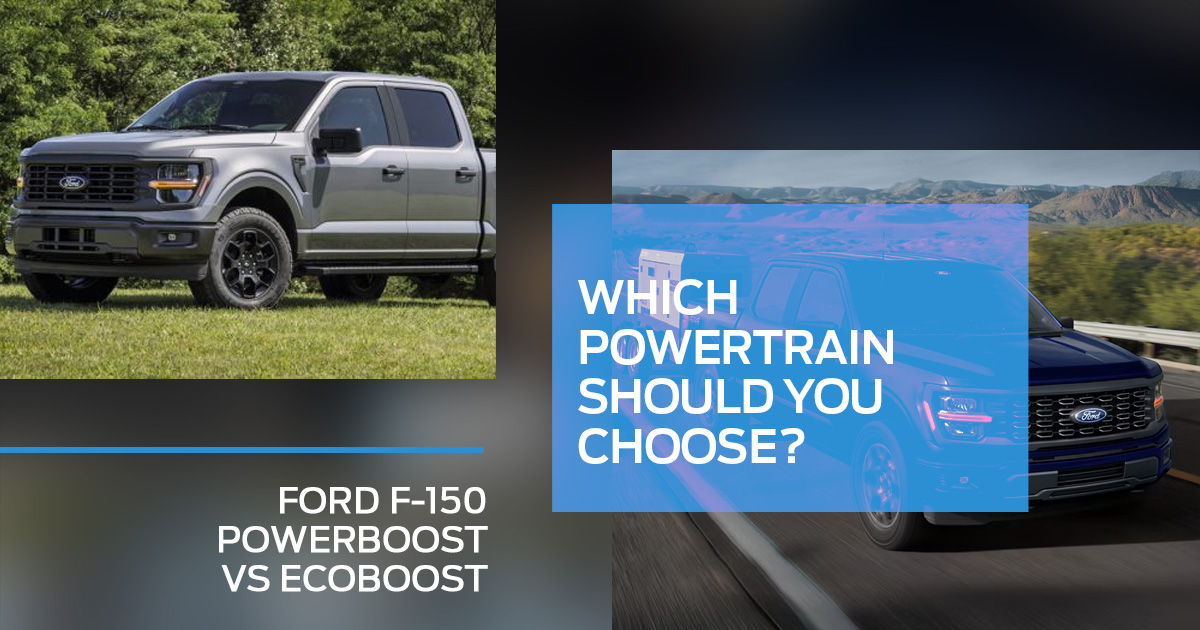
Choosing a Ford F-150 means opting for a full-size pickup truck known for its versatility, toughness and extensive customization options. However, choosing a powertrain remains an important decision, particularly when comparing Ford’s PowerBoost and EcoBoost technologies. While EcoBoost relies on turbocharging to deliver a balance of power, towing capability and fuel economy, PowerBoost adds an electric component to the equation to maximize torque and improve energy efficiency. These two technologies meet different needs, whether you use your truck for work, hauling equipment, towing a travel trailer or everyday driving.
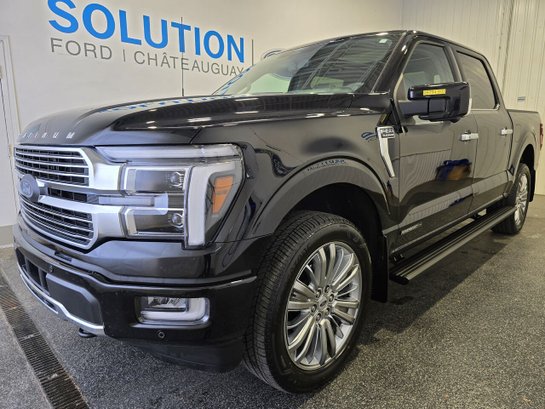
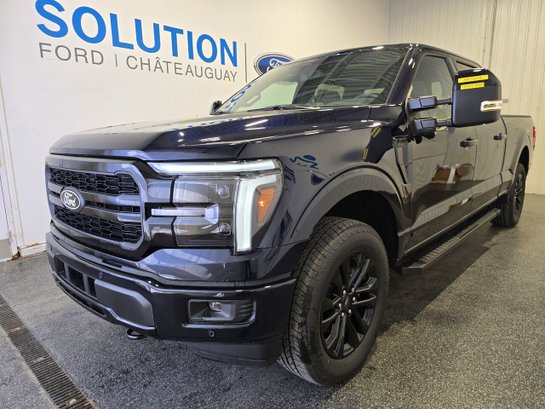
At Solution Ford in Châteauguay and Valleyfield, drivers across Montérégie and Montreal’s South Shore can explore the differentFord F-150 configurations and choose the one that best suits their needs. From commuting on Highway 30 and working on construction sites to enjoying water activities on Lake Saint-François and going camping, there are plenty of opportunities to take advantage of this truck’s capabilities. But which powertrain really offers the best compromise? Here is a detailed comparison of the EcoBoost and PowerBoost engines in the 2026 Ford F-150.
EcoBoost technology uses turbocharged gasoline engines designed to deliver high power output without necessarily requiring a large engine displacement. Thanks to turbocharging, direct injection and sophisticated electronic management, these engines can produce generous torque, which is particularly useful when accelerating, passing and towing. In the 2026 Ford F-150 lineup, the 2.7-litre and 3.5-litre EcoBoost V6 engines offer two levels of performance to meet the needs of both private and professional users.
PowerBoost takes this approach even further by combining a 3.5-litre EcoBoost V6 engine with an electric motor and a high-voltage battery. It is a full hybrid powertrain capable of recovering some of the energy generated during deceleration and braking. Unlike a plug-in hybrid vehicle, the Ford F-150 PowerBoost does not require a charging station. The system automatically manages the use of the electric motor and gasoline engine according to driving conditions, power demand and battery charge level. This design helps improve fuel economy in city traffic while retaining the capabilities expected of a full-size pickup truck.
The 2.7-litre EcoBoost V6 engine is an excellent option for drivers looking for a versatile truck without necessarily needing the F-150’s maximum towing capability. Producing 325 horsepower and 400 lb-ft of torque, this twin-turbocharged engine delivers impressive performance for everyday driving, hauling equipment and recreational activities. Its maximum towing capacity of 8,400 lb, when properly equipped, makes it possible to tow a utility trailer, personal watercraft, boat or certain travel trailers.
This engine is particularly well suited to drivers in Châteauguay, Mercier and Beauharnois who use their trucks for both work and personal activities. It also offers an appealing compromise for drivers who want the advantages of a full-size truck without needing a larger-displacement engine.
The 3.5-litre EcoBoost V6 engine is aimed more at drivers who need greater work capabilities. According to Ford Canada’s general specifications for the 2026 F-150, this engine produces 382 horsepower and 500 lb-ft of torque. It delivers a maximum towing capacity of 13,500 lb and a maximum payload of 2,400 lb, depending on the selected configuration. These features make it a particularly appealing engine for contractors, construction workers, owners of heavy trailers and camping enthusiasts with large travel trailers.
The engine’s generous torque also makes it easier to regain speed on the highway, especially when accelerating with a loaded trailer or merging into traffic. For drivers who regularly travel on Highways 20, 30 and 40, this reserve of power is a valuable advantage.

The Ford F-150 PowerBoost demonstrates that a hybrid powertrain can meet the demands of truck owners. By combining a 3.5-litre twin-turbo V6 with an electric motor, Ford offers a powertrain producing up to 435 horsepower and 578 lb-ft of torque, according to its general Canadian specifications for the 2026 F-150. This combined output delivers strong acceleration and excellent response when the driver demands more from the truck.
Electric assistance helps support the gasoline engine when starting off and accelerating. When conditions allow, the truck can also operate temporarily in electric mode. This intelligent energy management helps reduce fuel consumption, particularly in environments with frequent stops and starts.
With a maximum towing capacity of 11,600 lb and a payload of up to 1,740 lb, the PowerBoost remains a genuine work truck. Although its maximum capabilities are lower than those of the 3.5-litre EcoBoost V6, they meet a wide range of professional and recreational needs.
| Specifications | 2.7 L EcoBoost | 3.5 L EcoBoost | 3.5 L PowerBoost |
| Powertrain type | Twin-turbo gasoline V6 | Twin-turbo gasoline V6 | Twin-turbo hybrid V6 |
| Displacement | 2.7 L | 3.5 L | 3.5 L |
| Horsepower | 325 hp | 382 hp | 435 hp |
| Torque | 400 lb-ft | 500 lb-ft | 578 lb-ft |
| Transmission | 10-speed automatic | 10-speed automatic | 10-speed hybrid automatic |
| Drivetrain | 4×2 or 4×4 | 4×2 or 4×4 | 4×4 |
| Maximum towing capacity | 8,400 lb | 13,500 lb | 11,600 lb |
| Maximum payload | 1,775 lb | 2,400 lb | 1,740 lb |
| City fuel consumption (4×4) | 13.1 L/100 km | 14.0 L/100 km | 11.3 L/100 km |
| Highway fuel consumption (4×4) | 10.2 L/100 km | 10.2 L/100 km | 10.0 L/100 km |
| Combined fuel consumption (4×4) | 11.8 L/100 km | 12.3 L/100 km | 10.7 L/100 km |
| Pro Power Onboard | Up to 2 kW | Up to 2 kW | Up to 7.2 kW |
| External charging | No | No | No |
| Regenerative braking | No | No | Yes |
Maximum capacities vary depending on the trim, cab, drivetrain, equipment and selected packages. Fuel consumption ratings apply to 2026 model-year 4×4 configurations. Power output figures are taken from Ford Canada’s general specifications.
View our new Ford F-150 inventory
All three powertrains are paired with a 10-speed automatic transmission designed to make efficient use of the available power and torque. Its wide range of gear ratios allows engine speed to adapt to driving conditions, whether in city traffic, during highway acceleration or when towing. In the PowerBoost, the transmission is adapted to integrate the electric motor, allowing both power sources to work together.
In city traffic, the PowerBoost stands out for its electric assistance when starting off. Drivers who regularly travel through Châteauguay, Salaberry-de-Valleyfield or busier areas of the South Shore may appreciate this feature. The EcoBoost engines, meanwhile, offer a more traditional driving experience, with responsive performance and a generous reserve of torque. The choice between the two technologies therefore depends as much on driving preferences as on the truck’s intended use.
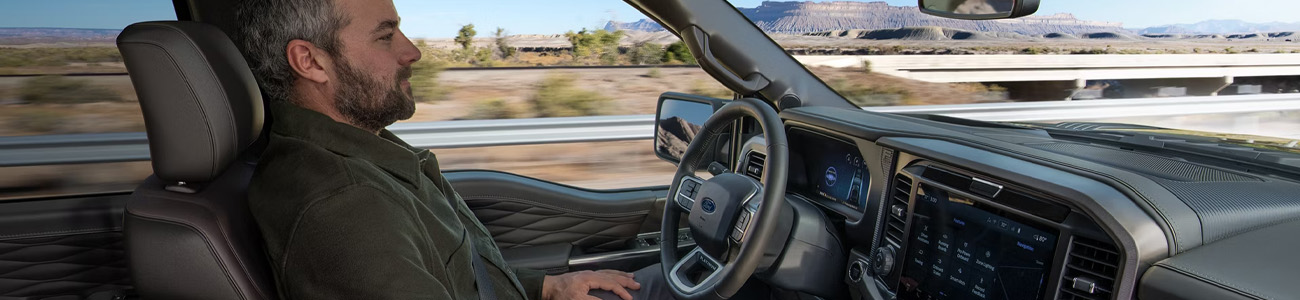
One of the main advantages of the Ford F-150 PowerBoost is its fuel economy. With a combined rating of 10.7 L/100 km in a 4×4 configuration, it consumes less fuel than the 3.5-litre EcoBoost V6, which has a combined rating of 12.3 L/100 km. The difference is even greater in the city, where the PowerBoost is rated at 11.3 L/100 km compared with 14.0 L/100 km for the EcoBoost of the same displacement. On the highway, however, the differences are much less pronounced.
For a driver travelling 20,000 kilometres annually, with a hypothetical gasoline price of $1.60 per litre, here are the potential savings.
| Estimated Annual Fuel Consumption and Costs | 2.7 L EcoBoost | 3.5 L EcoBoost | 3.5 L PowerBoost |
| Combined fuel consumption | 11.8 L/100 km | 12.3 L/100 km | 10.7 L/100 km |
| Annual gasoline consumption | 2,360 L | 2,460 L | 2,140 L |
| Annual cost | $3,776 | $3,936 | $3,424 |
| Five-year savings with PowerBoost | $1,760 | $2,560 | — |
Theoretical estimates based on constant mileage and fuel prices.
In this scenario, the PowerBoost could save approximately $512 per year compared with the 3.5-litre EcoBoost V6. Actual savings will depend on driving habits, outside temperatures, the weight being carried and how often the truck is used for towing. For drivers who mainly make short trips in the city, the benefits of hybrid technology could be particularly appealing.
Despite its higher horsepower and torque, the PowerBoost does not have the highest maximum towing capacity among the powertrains compared. The 3.5-litre EcoBoost V6 retains that advantage with a maximum towing capacity of 13,500 lb, or 1,900 lb more than the PowerBoost. This difference can be decisive for owners of large travel trailers, enclosed trailers or heavy professional equipment.
Payload also deserves particular attention, as it includes not only the equipment placed in the truck bed, but also the weight of occupants, added accessories and the trailer tongue weight applied to the hitch. Contractors in the Valleyfield area who regularly haul construction materials may therefore prefer the 3.5-litre EcoBoost. For family use, hauling recreational equipment or less demanding work, the PowerBoost’s capabilities remain very appealing.
Truck bed length, available in configurations including 5.5, 6.5 and 8 feet depending on the model, also affects the truck’s versatility. It is therefore important to consider the entire configuration rather than choosing solely on the basis of the powertrain.
Pro Power Onboard technology is one of the most compelling reasons to choose the PowerBoost. Thanks to its hybrid system, the truck can supply up to 7.2 kW of electrical power when equipped with the corresponding system. This feature turns the F-150 into a mobile power source capable of running various electric tools, appliances and accessories.
For contractors in Châteauguay, Beauharnois and Salaberry-de-Valleyfield, this technology can make it easier to work on job sites without convenient access to electricity. Camping enthusiasts can also take advantage of this feature to power certain equipment during their getaways. EcoBoost models can also offer onboard electrical power, but with a lower available output.
The F-150 also offers several driver-assistance and towing technologies, including Pro Trailer Backup Assist, Pro Trailer Hitch Assist and Ford BlueCruise, depending on the trim and selected equipment. Explore the differentFord technologies to better understand how they can simplify your travels and professional activities.
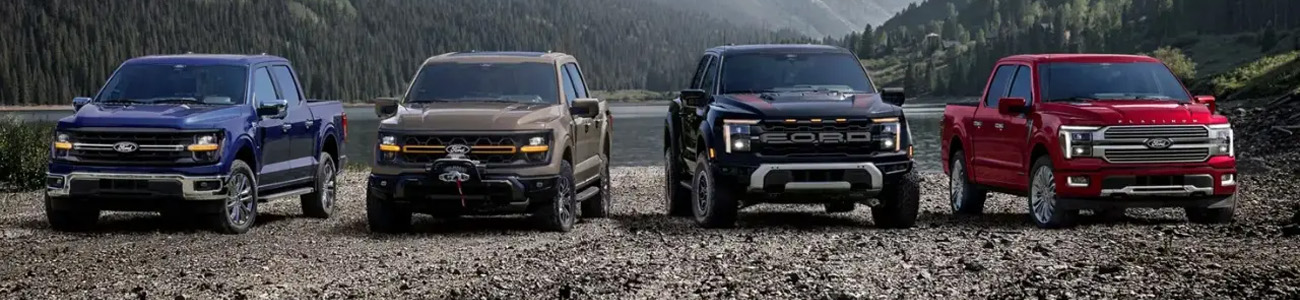
Winters in Montérégie can put vehicles to the test. Between snowstorms, sub-zero temperatures and travel on snow-covered roads, it is important to choose a truck suited to these conditions. EcoBoost and PowerBoost powertrains allow drivers to take advantage of the F-150’s capabilities with a four-wheel-drive system, which is particularly valuable when road conditions become difficult.
As with other hybrid vehicles, extremely cold temperatures can temporarily reduce the PowerBoost’s energy efficiency benefits. The gasoline engine may need to operate more frequently to heat the cabin and maintain an appropriate operating temperature for the system. EcoBoost engines also experience increased fuel consumption during the cold season. In both cases, quality winter tires, driving suited to the conditions and regular maintenance remain essential to making the most of the truck’s capabilities.
The 3.5-litre EcoBoost V6 remains particularly appealing for workers who want to maximize their truck’s towing and payload capacities. Its combination of high torque and generous hauling capabilities effectively meets the needs of contractors and owners of heavy trailers. However, the PowerBoost may be more advantageous for professionals who frequently use power tools on their job sites.
The PowerBoost is an excellent choice for drivers who use their truck every day and want to reduce fuel consumption without sacrificing performance. The 2.7-litre EcoBoost V6 is also an appealing option for those seeking a balance of power, fuel economy and purchase price. To compare the different possibilities, you can review the features and conditions of the2026 Ford F-150 XLT promotion, subject to availability.
Outdoor enthusiasts in Montérégie will find the PowerBoost a particularly versatile travel companion. Its onboard power system can be useful during camping trips, while its generous torque allows it to tow many types of travel trailers and boats. For the heaviest equipment, however, the 3.5-litre EcoBoost remains a preferred option, provided the appropriate configuration is selected.
Purchase price is naturally an important factor when choosing between an F-150 EcoBoost and PowerBoost. It is worth comparing trucks with similar equipment levels, as the trim, optional packages and configuration can significantly affect the final price. The PowerBoost’s fuel savings should also be weighed against any additional upfront cost.
Both technologies require regular gasoline engine maintenance, including oil changes. The PowerBoost also has components specific to its hybrid system. However, its regenerative braking can help reduce the use of conventional brakes in certain conditions. To establish a budget suited to your situation, explore ourFord financing options andget an appraisal of your trade-in vehicle.
Buying a pre-owned truck can also be an excellent solution. Ourpre-owned Ford F-150 inventory allows you to explore different powertrains, configurations and model years, depending on the vehicles available.
EcoBoost is a turbocharged gasoline engine, while PowerBoost combines a 3.5-litre EcoBoost engine with an electric motor and a high-voltage battery. PowerBoost therefore offers the advantages of a hybrid powertrain without requiring external charging.
The 3.5-litre PowerBoost is the most powerful of the three engines compared, with a combined output of up to 435 horsepower and 578 lb-ft of torque, according to the general Canadian specifications for the 2026 F-150.
The 3.5-litre EcoBoost V6 offers the highest maximum towing capacity of the powertrains compared. The PowerBoost also remains an excellent choice for many travel trailers, particularly if you want to take advantage of the Pro Power Onboard system. It is essential to verify the actual weight of your loaded travel trailer before selecting your truck.
No. The PowerBoost is a full hybrid vehicle that does not require plugging in. Its battery recharges automatically through the operation of the hybrid system and energy recovery during deceleration.
Yes, according to the official Canadian ratings for the configurations compared. Its advantage is particularly pronounced in city traffic, where electric assistance and regenerative braking help improve energy efficiency.
Yes. The PowerBoost can be used year-round in Quebec. Its four-wheel-drive system is an advantage in winter conditions, although extremely cold temperatures can affect its fuel consumption.
Yes, certain EcoBoost configurations can be equipped with the 2 kW Pro Power Onboard system. The PowerBoost, however, offers greater available electrical output, reaching up to 7.2 kW.
Whether you are looking for the towing capability of the 3.5-litre EcoBoost V6, the versatility of the 2.7-litre EcoBoost or the energy efficiency of the PowerBoost, the Ford F-150 offers a powertrain suited to many lifestyles. At Solution Ford in Châteauguay and Valleyfield, our team is here to help you choose your next truck and compare the available trims, equipment and capabilities.
Whether you live in Mercier, Léry, Beauharnois, Saint-Constant or elsewhere in Montérégie, we invite you tobook a test drive, review the conditions totake advantage of our Ford offer orcontact our team for more information.
Explore our new Ford F-150 inventory
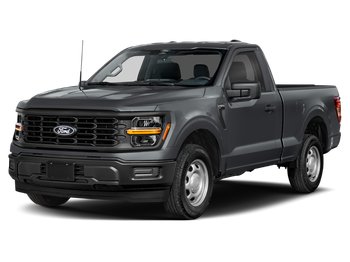
$175
weekly for 36 months
with a down payment of $0
Plus, on now Until Nov. 30, a Black Friday Bonus of $750 On Most 2026 F-150 Models.Includes $1,500 In Loyalty Bonus
Retail price
$61,620
* Photo for illustrative purposes only. Certain conditions apply.
$175
weekly for 36 months
with a down payment of $0
Plus, on now Until Nov. 30, a Black Friday Bonus of $750 On Most 2026 F-150 Models.Includes $1,500 In Loyalty Bonus
Retail price
$61,620
* Photo for illustrative purposes only. Certain conditions apply.